
The Sourdough Reset - Part 1: Starting Over with My Starter
For nearly a decade, my sourdough starters have been continual failures, but for some reason, I don't accept defeat easily. I’ve tried every method available: I’ve attempted to cultivate wild yeast from scratch, I’ve been gifted active "heritage" starters from my friends, and I’ve tried rehydrating professional dried flakes. Every single time, the result was a technical failure. Usually, I’d end up with a starter succumbed to fuzzy, grey-green mold. Even with a top-tier sourdough book on my shelf, I couldn't bridge the gap between the printed instructions and the reality of my kitchen.
Problems of the Past
Traditional sourdough guides are often too vague or way too extensive, leaving a gap between theory and execution. I have a reasonable understanding of yeast and bread-making; on paper, my feeding schedules and activity levels looked correct. However, despite following the "rules," the results never materialized. There was a missing link between the generalized instructions and the specific variables of my environment that standard guides simply couldn't account for.
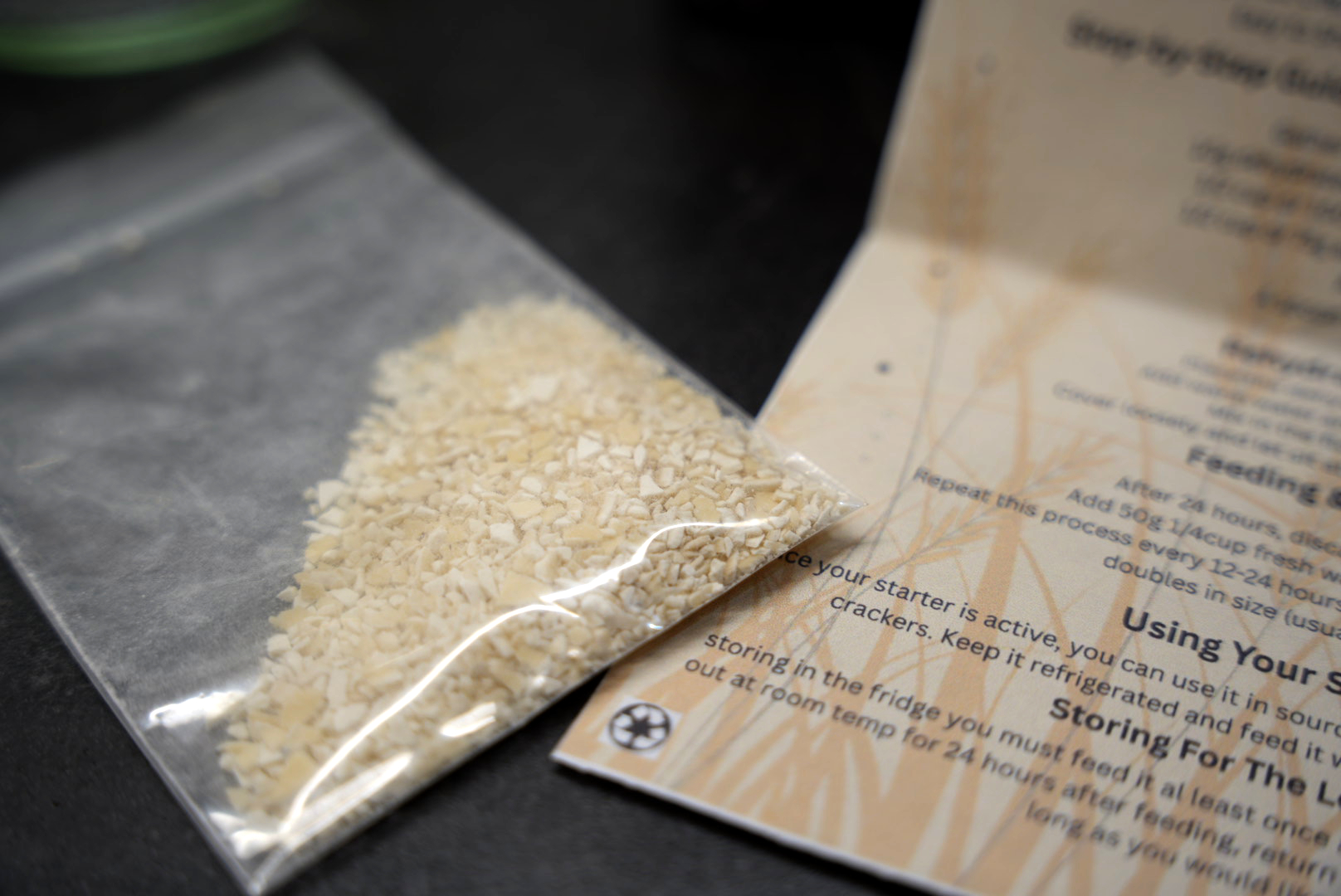
Yet, it is in the middle of a snow storm that I decided it was time to try again. I ordered dehydrated Canadian starter from Scotian Isle and decided to do things differently.
The Gemini Experience: A Technical Audit
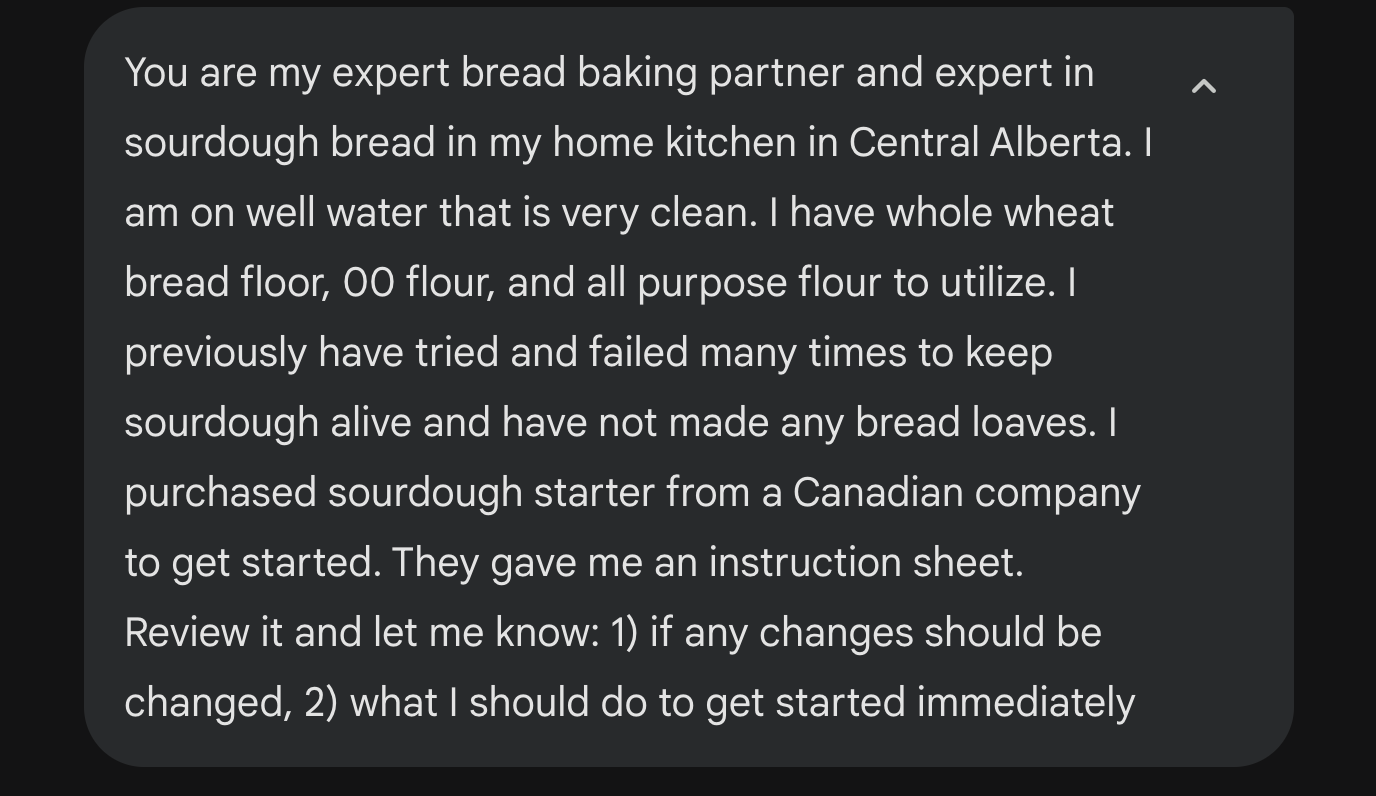
Instead of following the Scotian Isle dehydrated starter instructions to a tee, I partnered with Gemini to evaluate the variables of my kitchen. I treated the rehydration process as a logic puzzle rather than a recipe.
- Inventory Check: I evaluated the flours I had on hand (00 flour, All-Purpose, and Whole Wheat Bread flour). Gemini identified the Whole Wheat Bread flour as the superior "engine" for a reset due to its higher protein content and bran-based nutrients that jumpstart fermentation.
- Environment Audit: It was -22°C outside the night I started. Gemini suggested a thermal workaround—using a microwave with the light on and the door propped to create a stable 24°C–26°C incubator.
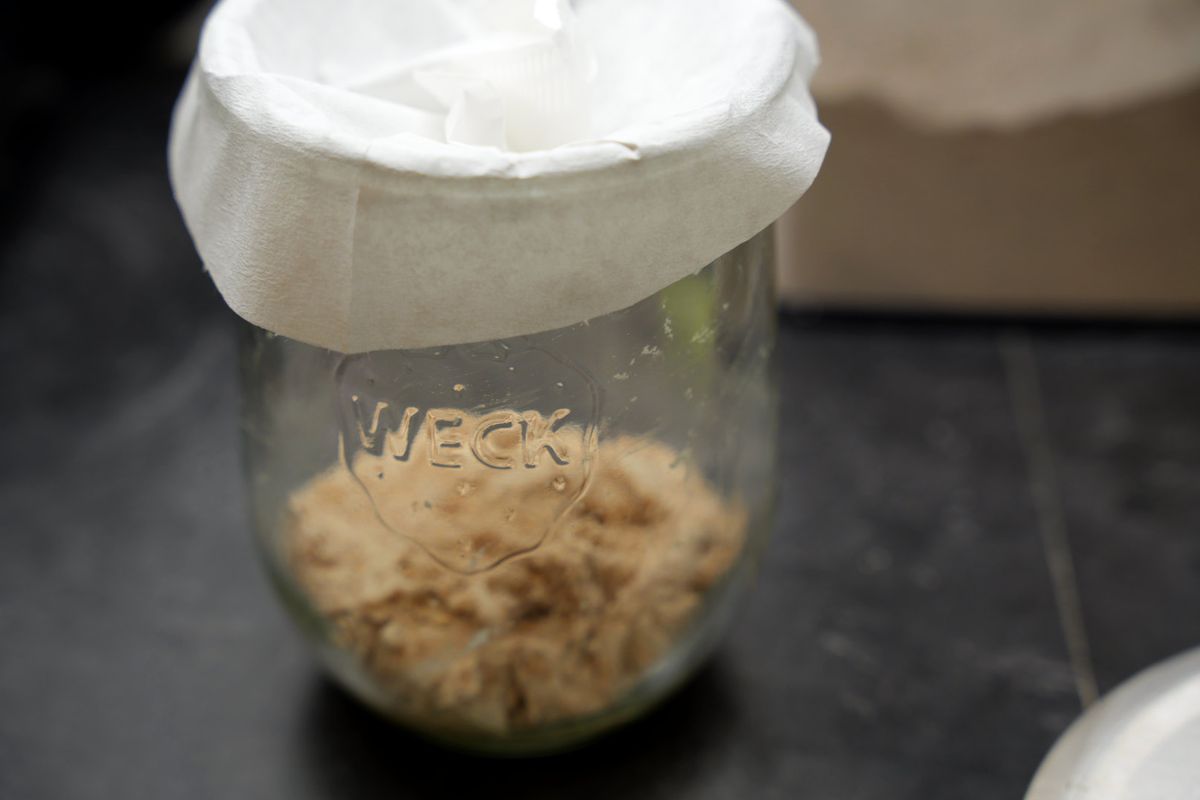
- Hardware Hack: I found an old Weck jar but lacked the lid. We bypassed the need for a seal by using a coffee filter, allowing for oxygen exchange without suffocation.
Join the Reset
If you’ve spent years throwing out jars of moldy flour, stop repeating the same recipes and start adjusting for your specific variables.
The Challenge: Stop guessing. If your starter is currently a mess, drop your kitchen temp and flour type into Gemini and ask for a hydration audit.
In Part 2, we’ll analyze the first 24 hours of activity. Did the -22°C cold win, or did the data-driven hydration ratio finally give us the rise we’ve been chasing for a decade?
Comments
No comments yet. Be the first to share your thoughts!